
The Ultimate Guide to GS6 Telescopic Goal Posts: Protecting Your Team from Overhead Cables on UK Highways
Updated: May 14
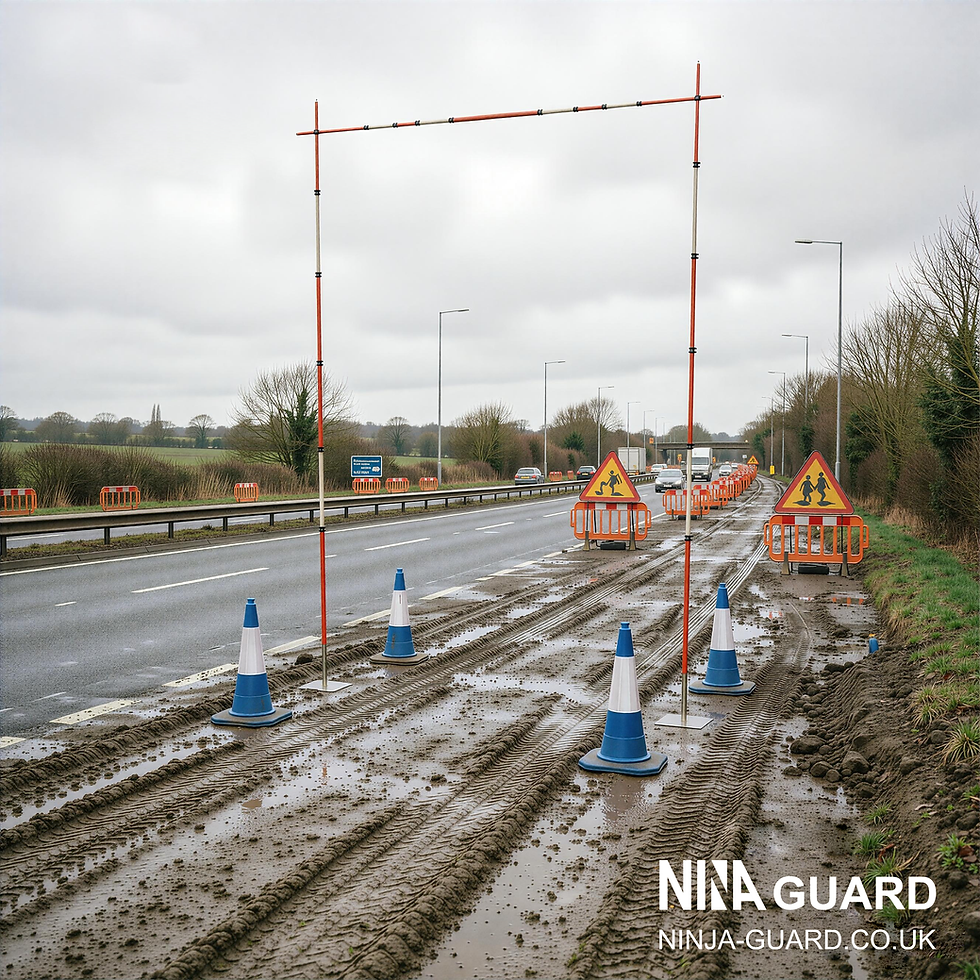
If you work in construction, utilities, or traffic management on UK roads, you have likely seen them: the bright red and white poles standing guard beneath overhead power lines. Officially known as Ninja Guard GS6 Telescopic Overhead Cable Goalposts, these devices are a lifesaving requirement under HSE guidance.
However, simply placing them on the tarmac isn't enough. To comply with UK law (Chapter 8) and ensure genuine safety, you need to know how to deploy them correctly.
What is a GS6 Goal Post?
Despite the sporting name, this kit is a height restriction warning barrier. It is designed to provide a highly visible, physical warning to drivers of excavators, tipper trucks, and cranes that they are approaching the danger zone of live overhead power lines.
The Standard Kit Includes:
2 x Telescopic Poles: Usually made of non-conductive FRP to prevent electrocution even if touched to a live line.
Warning Bunting or Solid Crossbar: Most highway applications use a high-visibility red/white bunting strung between the poles. Alternatively, a telescopic rigid crossbar can be used to create a physical "gate" frame.
Stabilising Bases: Heavy steel or water-fillable plastic bases (weighing up to 110kg when full) to keep the posts upright in high winds.

The "How-To": Using the System on the Highway
Using these posts is more technical than just "putting them up." To adhere to HSE GS6 guidance and Chapter 8 regulations, follow this step-by-step guide.
1. The "Stop" Position (Placement)
The most common mistake is placing the goalposts directly under the wires.
The Rule: Position the goalposts on each side of the power lines at a safe distance.
The Logic: They must act as a "gate." If a vehicle hits or passes the bunting, it must have time to stop before reaching the live cables.
2. Achieving the Correct Height
The Guideline: Generally the bunting can be set at a height that ensures a minimum clearance of 5.41 metres at the midpoint (accounting for sag in the bunting), though poles often extend up to 7.3m to achieve this. Please refer to HSE GS6 Guidance when setting the height.
The Action: Extend the telescopic sections. Modern kits use hand-controlled quick-release clamps—no tools are required. Ensure all clamps are locked tight to prevent the pole from sliding down due to vibration from traffic.
3. Ensuring Stability
On a public highway, wind buffet from passing HGVs can knock over poorly secured posts.
Steel Bases: Heavy and low-profile. If the asphalt is hot/soft, place plywood under the base to prevent sinking and sand bags to add extra weight and stability.
Plastic Metro or Ballast Block Bases: If using water-filled bases (approx. 100kg), ensure the fill caps are sealed. For long-term roadworks, fill with concrete for maximum stability.

The Solid Crossbar vs. Bunting Debate
Bunting (Standard): Best for creating a wide visual barrier over long distances. It sags, which helps catch the driver's eye by moving in the wind.
Solid Telescopic Crossbar: This creates a rigid goalpost structure (like a football goal). This is ideal for highways because it removes the risk of the bunting snapping or sagging too low. It provides a definitive "header" height limit for drivers.

https://www.ninja-guard.co.uk/product-page/bunting-flag-red-and-white-flag-26m

Legal & Safety "Golden Rules"
Before you purchase and install your GS6 Goalpost, remember these non-negotiables:
It is NOT a toy: Under the Highways Act 1980, placing anything on a highway that endangers users is an offence. A poorly installed goalpost that falls into traffic is dangerous and illegal.
Non-Conductive is Mandatory: Never use metal poles. The GS6 standard requires non-conductive materials.
Check the Sag: If using bunting, tie it tight enough to provide a clear warning line, but loose enough to account for the poles flexing. The mid-point clearance must comply with HSE GS6 Guidelines.
Thank you for reading.


Comments